Written by Thiago Campbell, Washington State University, June 2026
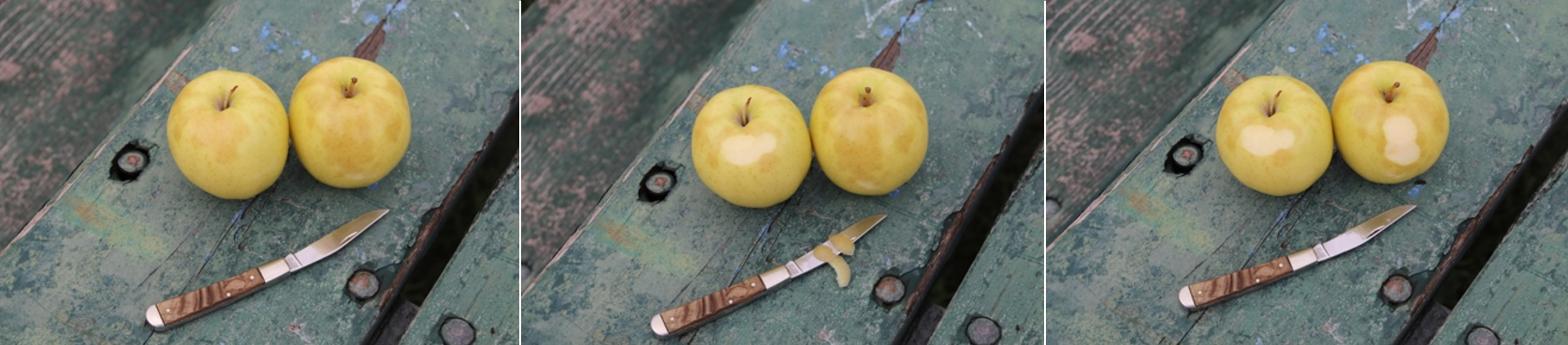
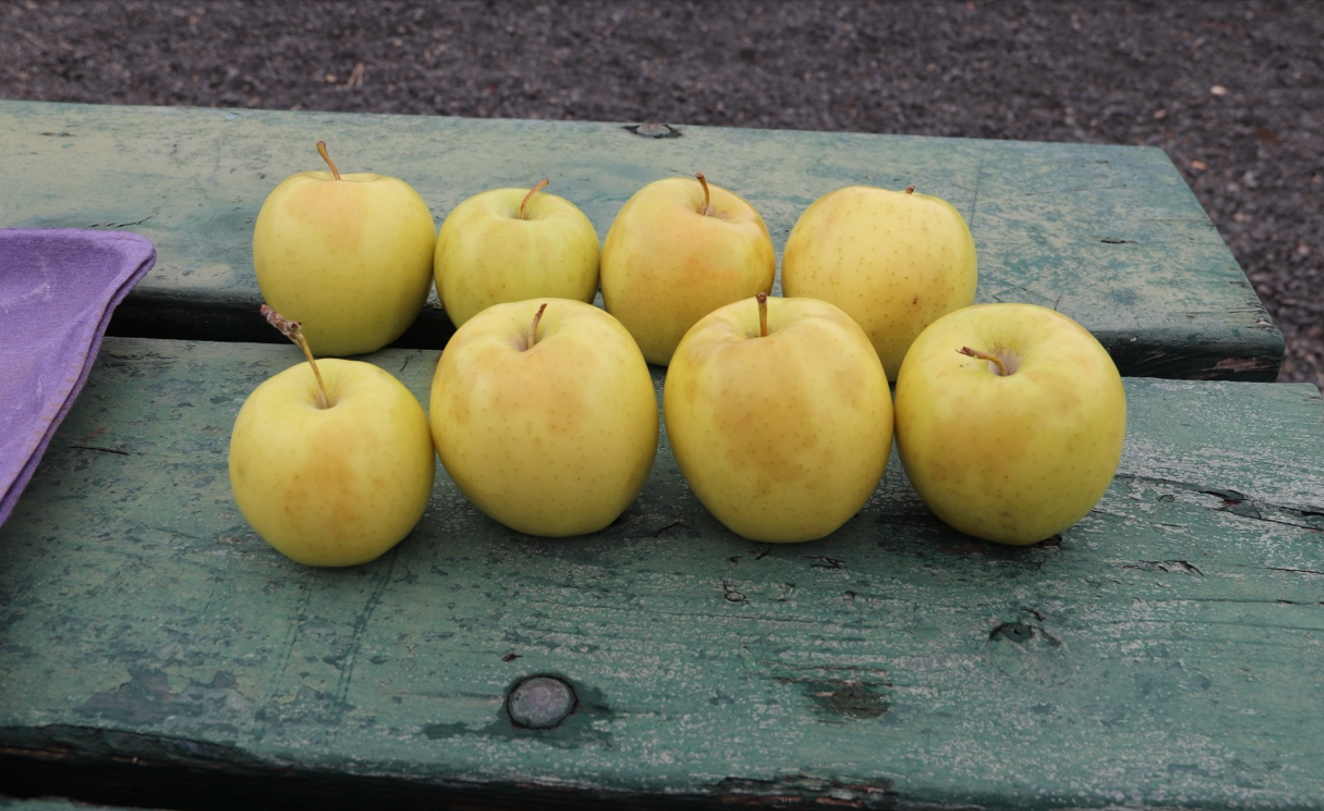
“Ghosting”, or diffuse skin browning (DSB), is a physiological disorder of apple occurring more frequently in warmer growing regions. This disorder appears to only affect ‘Golden Delicious’ (Larrigaudière et al., 2010). It is characterized by superficial diffuse browning that appears immediately below the epicuticle, hence its other name. Another more severe symptom is the roughening of the peel (Larrigaudière et al., 2010). It can be confused with superficial scald, another postharvest physiological disorder of apples, although superficial scald symptom appearance is typically more patterned and severe (Kupferman, 2001). While both cause varying degrees of skin browning, disorder mitigation, timing of symptom appearance, disorder management practices, and, potentially, the underlying physiological mechanisms are different between the disorders. As with superficial scald, DSB is likely a symptom of chilling injury beginning with the transition from orchard to cold chain temperatures (Larrigaudière et al., 2010).
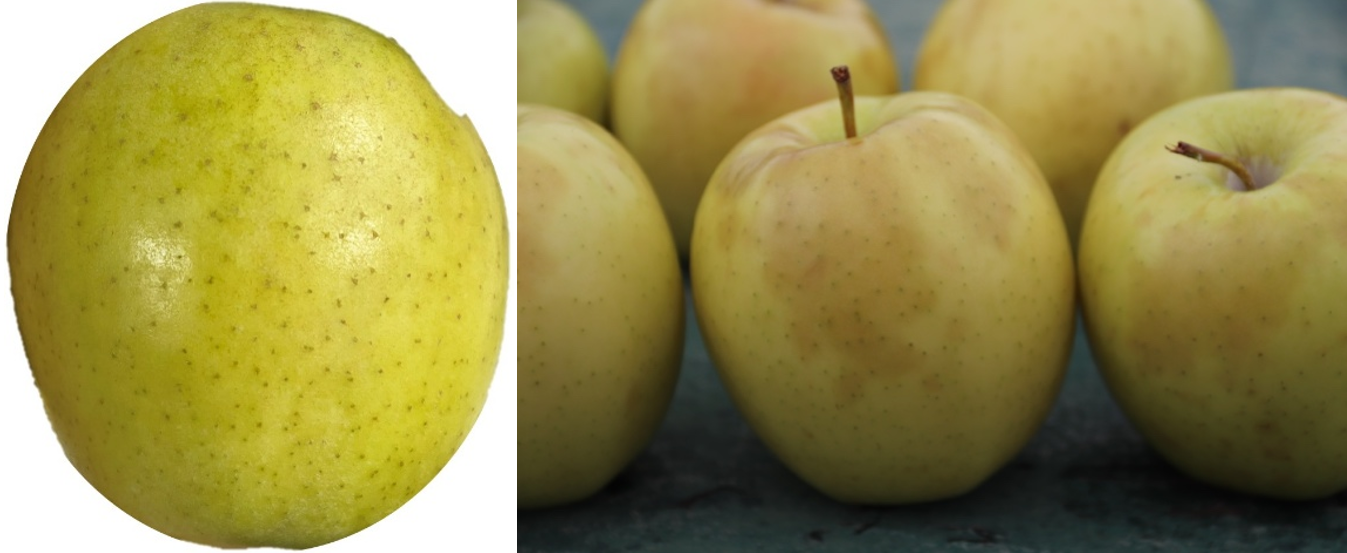
Diffuse skin browning (DSB) is more prevalent in areas with hot summers (Larrigaudière et al., 2010), making it of particular importance to growing regions within eastern Washington state, where it continues to contribute to downgrades at several packinghouses (personal communication). There has not been sufficient research on DSB to identify its direct causes and controlling mechanisms. Larrigaudière et al. (2010) linked DSB to ethylene since DSB only appeared on apples treated with 1-MCP (1-methylcyclopropene), a treatment that, when applied appropriately, can eliminate superficial scald. Additionally, also unlike superficial scald, DPA treatment and CA storage did not impact DSB incidence. Further studies are needed to determine the specific changes elicited by 1-MCP and how these can contribute to the development of DSB.
Control of DSB is complicated and results can vary. While Larrigaudière et al. (2010) controlled DSB through step-down cooling, Gamrasni et al. (2010) found 1-MCP application had to be delayed in addition to step-down cooling. Gamrasni et al. (2010) held ‘Golden Delicious’ apples at 7°C (45°F), with gradual temperature drops eventually reaching 0°C (32°F) over a 3-week acclimation period. 1-MCP was applied 1, 10, 15, and 20 days after harvest. Delaying 1-MCP application by 10-20 days after harvest eliminated DSB incidence. Larrigaudière et al. (2010), on the other hand, held 1-MCP treated ‘Golden Delicious’ apples at 6.5°C (44°F) immediately following harvest, then progressively decreased the storage temperature by 1.5°C (2.7°F) weekly, eventually reaching 0.5°C (33°F) before establishing controlled atmosphere (CA) (2% O2, 2% CO2, 92% relative humidity).
| Results | Larrigaudière et al., 2010 | Gamrasni et al., 2010 |
|---|---|---|
| Initial storage temperature | 44°F (6.5°C) | 45°F (7°C) |
| Final storage temperature | 33°F (0.5°C) | 32°F (0°C) |
| Time to reach final temperature | 11 weeks | 3 weeks |
| 1-MCP application | Immediate | Delayed 10-20 days from receiving |
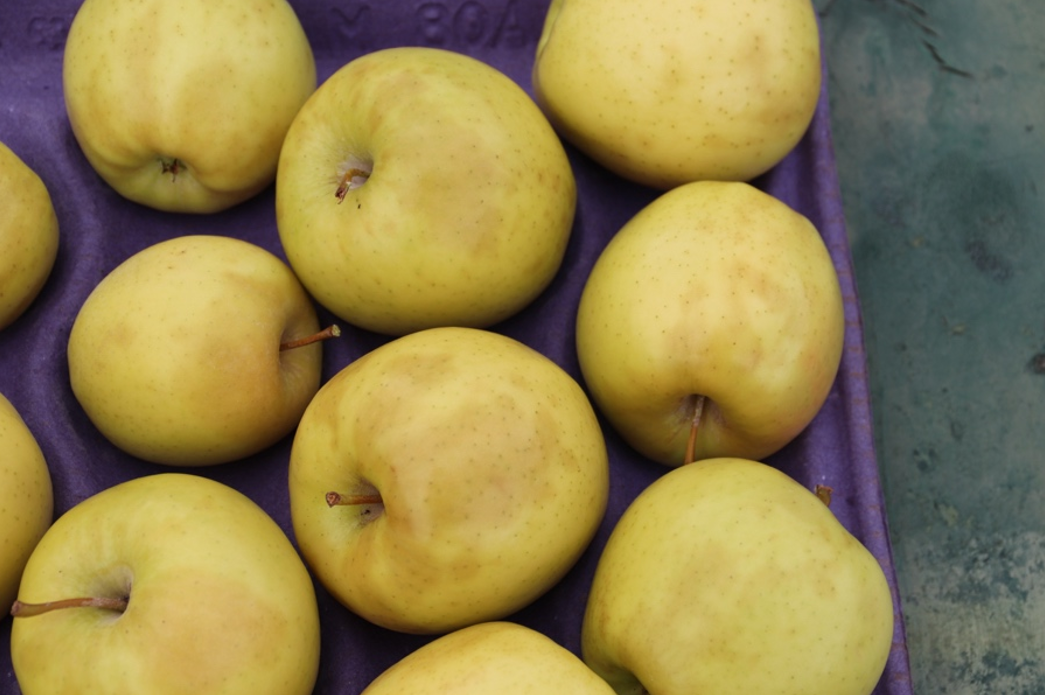
To date, step-down cooling is the most effective method for reducing DSB incidence on ‘Golden Delicious’. More evidence is required to substantiate whether delaying 1-MCP application consistently reduces DSB. A better understanding of the mechanisms controlling and causing DSB on ‘Golden Delicious’ apples would allow for proactive management of the disorder starting in the field.
Additional Photos
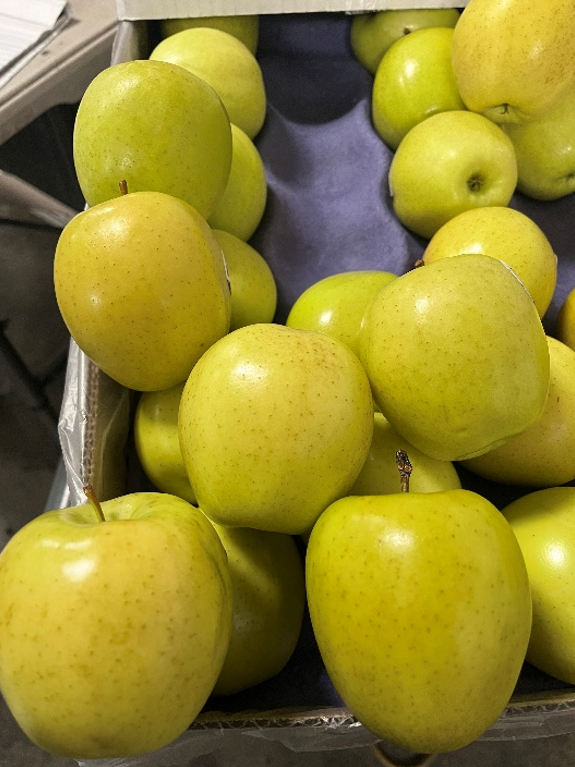
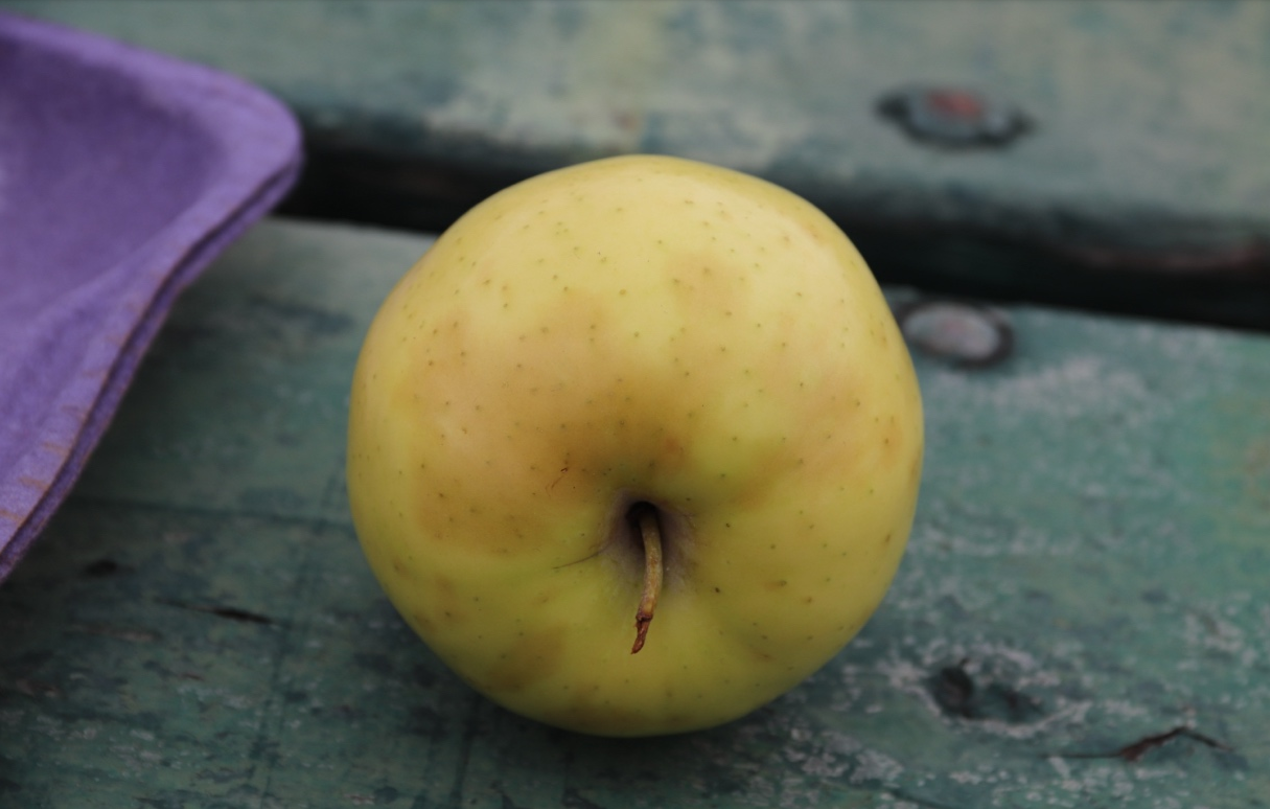
References & Additional Information
Kupferman, G. 2001. Storage scald of apples. Postharvest Information Network. Accessed from: http://postharvest.tfrec.wsu.edu/EMK2000C.pdf
Gamrasani, D., O. Nerya, A. Tsvilling, A. Gizis, M. Maoz-Katz, and R. Ben-Arie. 2010. The complexity of preventing diffuse skin browning (DSB) on 1-MCP (SmartfreshSM)-treated ‘Golden Delicious’ apple. Proc. 6th International Postharvest Symposium. Acta Hortic. 877.
Larrigaudière, C., R. Vilaplana, I. Recasens, Y. Soria, and E. Dupille. 2010. ‘Diffuse skin browning’ in 1-MCP-treated apples : etiology and systems of control. J. Sci. Food Agric. 90:2379-2385. https://doi.org/10.1002/jsfa.4094
Contact

Thiago Campbell
Washington State University
Thiago.campbell@wsu.edu
(786) 375-1363
Funding and acknowledgements
Funding – WSU Tree Fruit ITT Endowment
Acknowledgement – Dr. David Rudell (USDA) for reviewing and editing this article
Fruit Matters articles may only be republished with prior author permission © Washington State University. Reprint articles with permission must include: Originally published by Washington State Tree Fruit Extension Fruit Matters at treefruit.wsu.edu and a link to the original article.