Agriculture has a meaningful role to play in supporting Washington’s ambitious climate goals. This new grant program helps farmers purchase equipment that reduces agricultural greenhouse gas emissions while improving soil health, air and water quality, and operational resilience. The goal is to make it easier and more affordable for producers to provide public benefits from their private lands. This program is supported with funding from Washington’s Climate Commitment Act. Learn more at the climate smart farm equipment grant webpage.
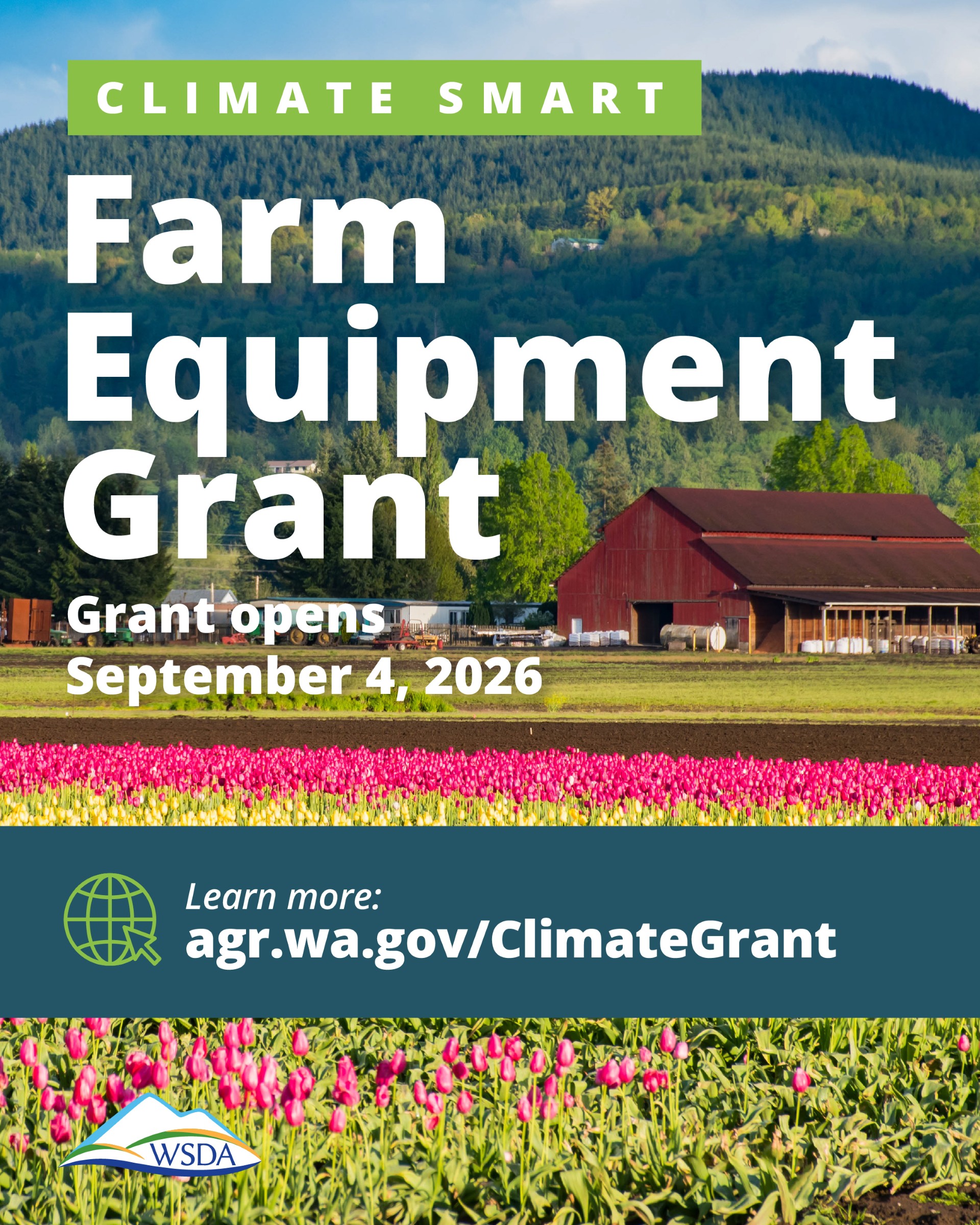
- Application window: Between September 4th and October 19th or until funds are exhausted
- Total funding available: Up to $4.37 million
- Who can apply: Commercial agriculture and aquaculture operations in Washington State
- Application type: First-come, first-served
- Funding type: Reimbursement grant
- Maximum award:
- 75% of equipment costs up to $200,000
- An enhanced reimbursement of 85% of equipment costs up to $200,000 may be available to eligible small farms, citizens and businesses of Federally Recognized Tribes, veterans, and operations in areas of high environmental burden
- Equipment must be paid for and received on-farm by June 1, 2027
- How to prepare:
- Register for a Washington Statewide Vendor (SWV) number
- Get a vendor quote for equipment you’d like to purchase
- Check the WSDA website often for updates, including a draft list of eligible equipment and review criteria
- Help us spread the word!
- Contact WaSHI@agr.wa.gov for questions and ideas
What does the grant pay for?
Equipment used in on-farm production that reduces greenhouse gas emissions or increases carbon storage. Examples include (but are not limited to):
- No-till drills
- Compost spreaders
- Electric pumps
- GPS precision ag equipment
Delivery fees for eligible equipment are also covered.
What purchases are not eligible for this grant?
- Equipment used exclusively for post-harvest practices such as processing, packing, or transportation
- Electric trucks
- Professional services or labor such as planners, agronomists, or mechanics
- Site development (engineering, permitting, etc.)
- Installation costs
- Subscription-based services or equipment
- Soil amendments
- Small hand tools, parts, or materials secondary to the equipment requested
- Equipment—as determined by internal review processes—that lack sufficient evidence for greenhouse gas reduction potential