Written by Thiago Campbell and Carolina Torres, Washington State University, February 2026
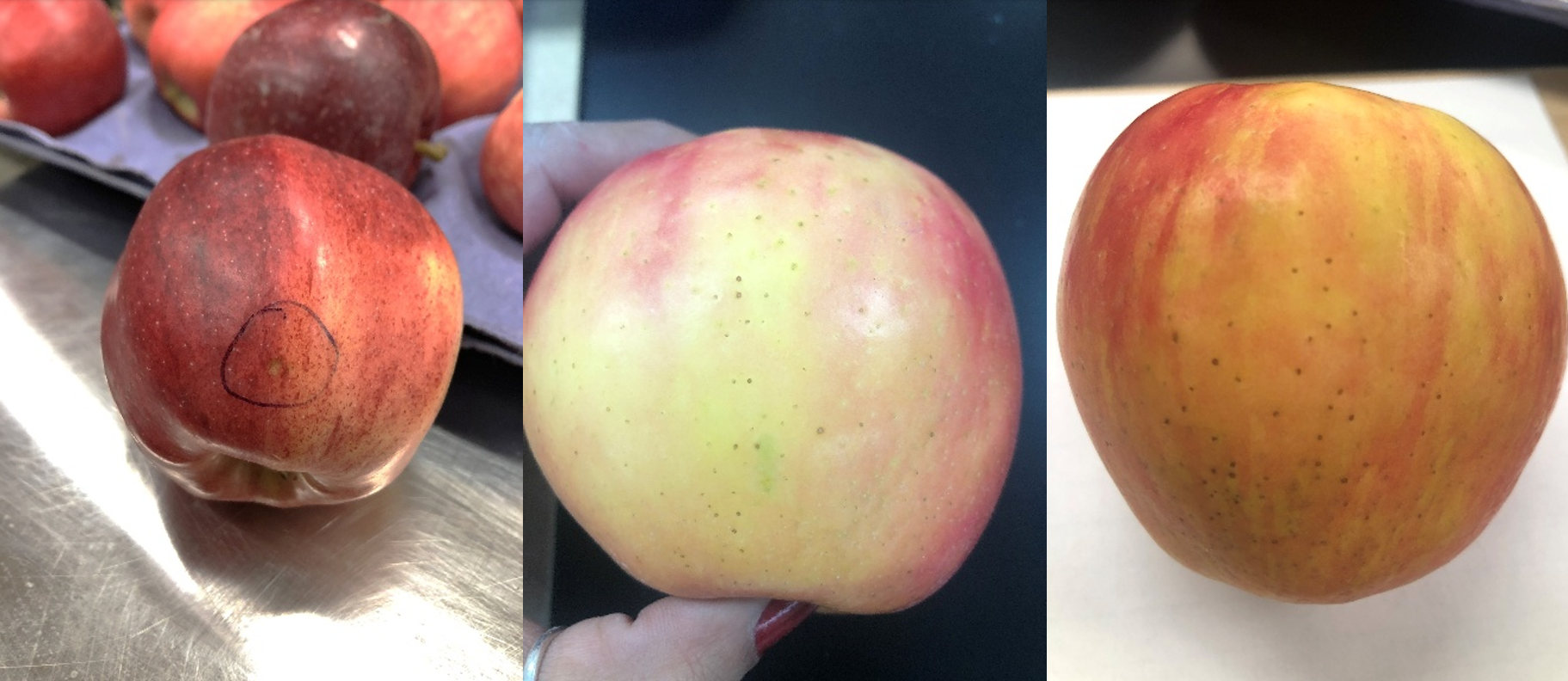
Lenticel breakdown disorder (LBD) is a physiological disorder that manifests as dark, sunken lesions centered in lenticels on the fruit’s surface (Curry, 2003). These lesions primarily develop after processing, making it difficult to diagnose before packing. While development of LBD primarily occurs postharvest, preharvest conditions play a crucial role in the predisposition of the fruit to lenticel breakdown. Orchard environmental conditions, specifically hot and dry climates during fruit development (Turketti et al., 2012), mineral imbalances, and harvest maturity play key roles in the development of LBD. Cultivars also play a big role; ‘Gala’ and ‘Fuji’ are particularly susceptible to LBD, while other cultivars are less likely to develop and express symptoms. In the context of postharvest, mineral buildup in dump tank water, such as phosphorus, calcium, boron, and potassium concentrations can increase the risk of LBD (Torres et al., 2025). Using effective filters and reducing water recirculation can reduce LBD susceptibility and development post-packing.
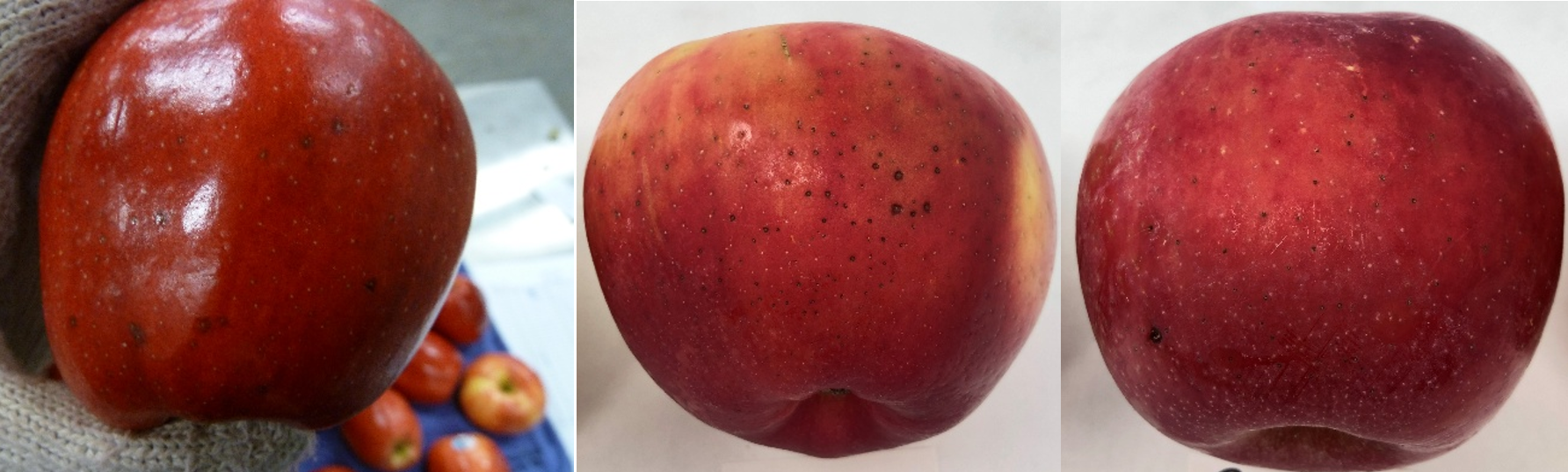
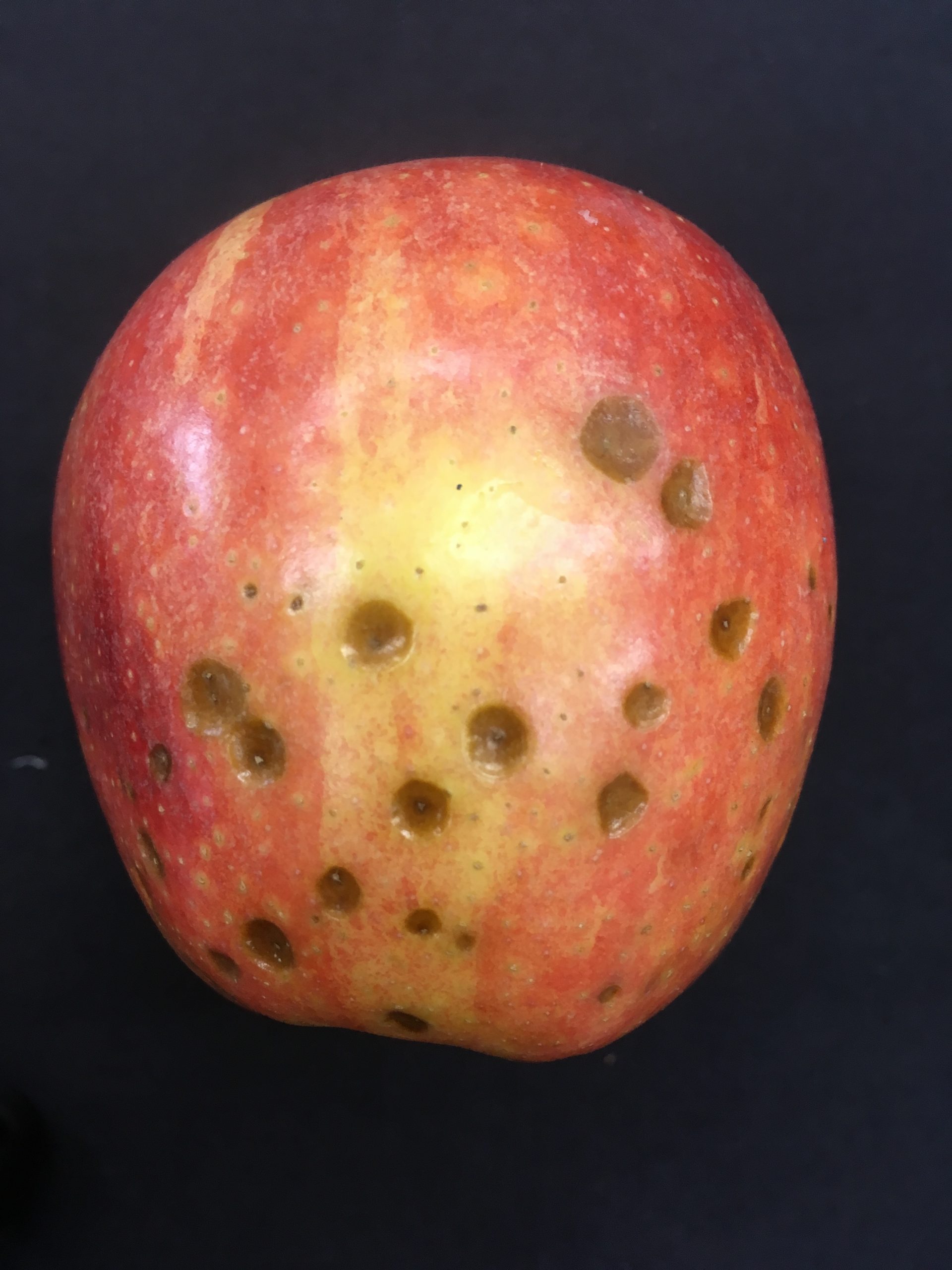
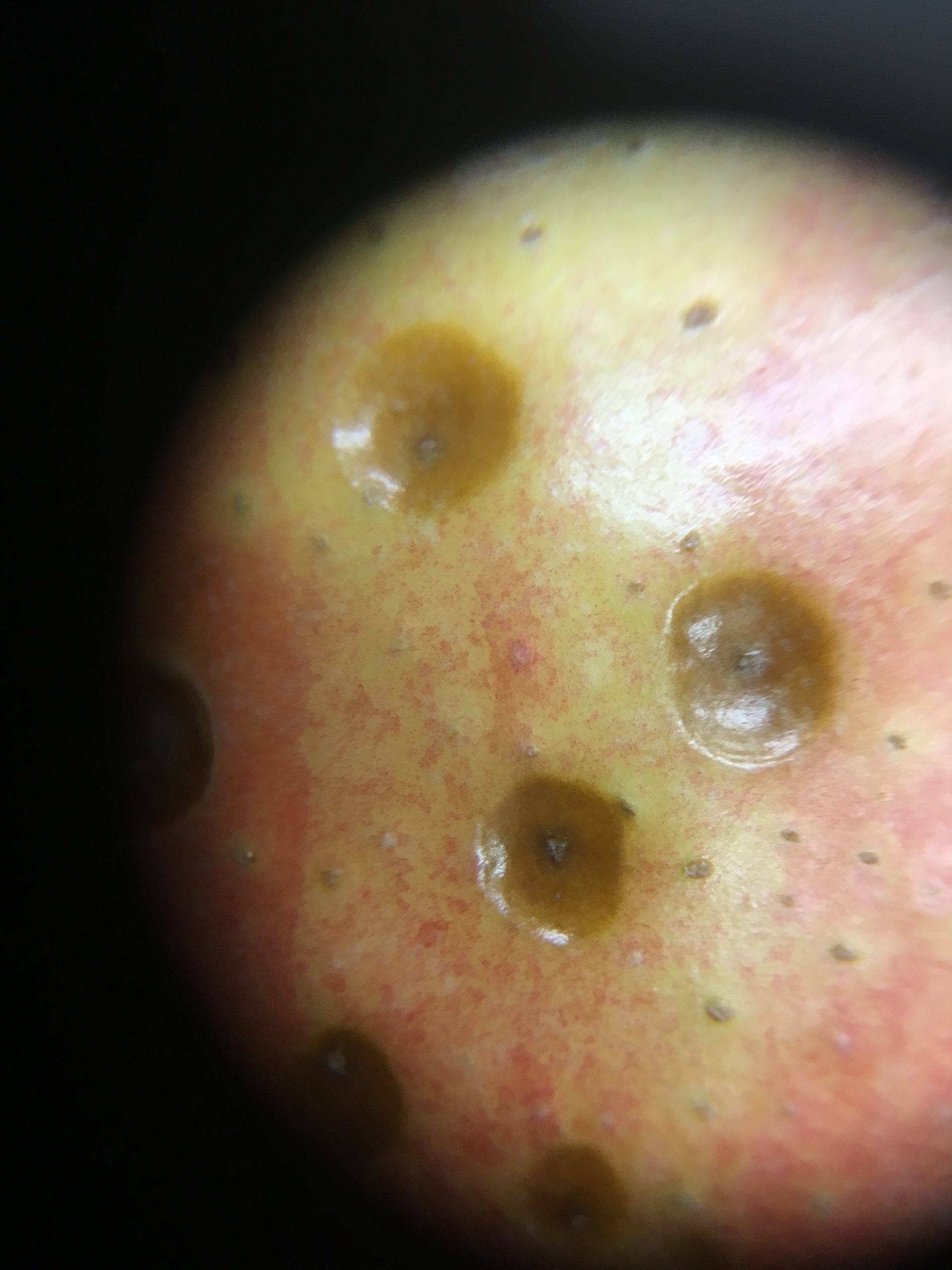
Figures 4 and 5. Severe lenticel breakdown. (PC: Garrett Bishop)
Preharvest management
Stressful conditions during the growing season, specifically heat and drought, lead to increased LBD incidence. Hot temperatures during the last weeks of fruit growth are where more issues arise, since the cuticle cannot keep up with the enlarging fruit (Turketti et al., 2012). Advanced fruit maturity can also increase fruit susceptibility to LBD, emphasizing the importance of monitoring fruit maturity and harvest at the correct time. Monitoring mineral content of fruits is important for identifying imbalances before harvest and informing storage decisions.
Postharvest management
When ready for packing, fruits are run on the packing line to clean, sort, and size fruit. Fruits are lowered in dump tanks, where water is recirculated and used to lift fruit out of bins. Recirculating water can quickly build up mineral concentration if left unsupervised, which can exacerbate LBD incidence. While it is not feasible to change water after every bin, mineral levels of dump tank water should be continuously monitored to decide when the water should be changed, particularly phosphorus levels which were linked to greater LBD incidence. Filtration systems can help reduce mineral buildup as well. Sanitizers are included in dump tank water to preserve quality and reduce decay incidence (Ruiz-Llacsahuanga et al., 2011). While there is concern of sanitizers increasing LBD incidence, Torres et al. (2025) found chlorine (50 mg·L–1) and peracetic acid (50 mg·L–1) did not impact LBD incidence and could be used without negative effects.
Conclusions
- Preharvest management of fruits is crucial for reducing LBD. Heat stress protection, fruit maturity monitoring, and mineral imbalances all have significant impacts on LBD development and progression.
- Filtration and reducing excessive water recirculation can help reduce LBD incidence postharvest. Additionally, sanitizers used at recommended doses have shown no significant impact on LBD incidence.
Additional photos
Contact

Thiago Campbell
Washington State University – Extension
Thiago.campbell@wsu.edu
(786) 375-1363
Additional information
Curry, E.A., 2003. Factors associated with apple lenticel breakdown. Postharvest information network (April): 1-9.
Ruiz-Llacsahuanga, B., Hamilton, A., Zaches, R., Hanrahan, I., Critzer, F. 2021. Utility of rapid tests to assess the prevalence of indicator organisms (aerobic plate count, Enterobacteriaceae, coliforms, Escherichia coli, and Listeria spp.) in apple packinghouses. International Journal of Food Microbiology, 337, 108949.
Torres, C.A., Mogollon, R., Critzer, F., Ruiz-Llacsahuanga, B., Sanchez-Tamayo, M., Anderson, K. 2025. Lenticel breakdown disorder development on apples (Malus domestica Borkh.): A survey of water chemistry during packaging and the effect of sanitizers in the processing water. HortScience, Vol. 60, Issue 7, Pages 1050-1057.
Turketti, S.S., Curry, E.A., Lötze, E. 2012. Role of lenticel morphology, frequency and density on incidence of lenticel breakdown in ‘Gala’ apples. Scientia Horticulturae, Vol. 138, Pages 90-95.
Fruit Matters articles may only be republished with prior author permission © Washington State University. Reprint articles with permission must include: Originally published by Washington State Tree Fruit Extension Fruit Matters at treefruit.wsu.edu and a link to the original article.