Written by Thiago Campbell and Dani Gray, Washington State University, April 22, 2026
The importance of postharvest bin handling
Tree fruit (primarily apples and pears in this scenario) in Washington state are harvested into wooden/plastic bins, brought to packinghouses and either packed immediately or put into storage until they are pulled out for packing. After being run on the packing line, bins are stored until the next harvest season, where they will be used again. If bins are packed soon after harvest, they can be recycled in the same harvest season for late-season cultivars. Bin management and handling practices vary widely between packinghouse operations. Increasing concern has emerged regarding the potential for harvest bins to harbor pests and re-contaminate fruit with fungal pathogens.
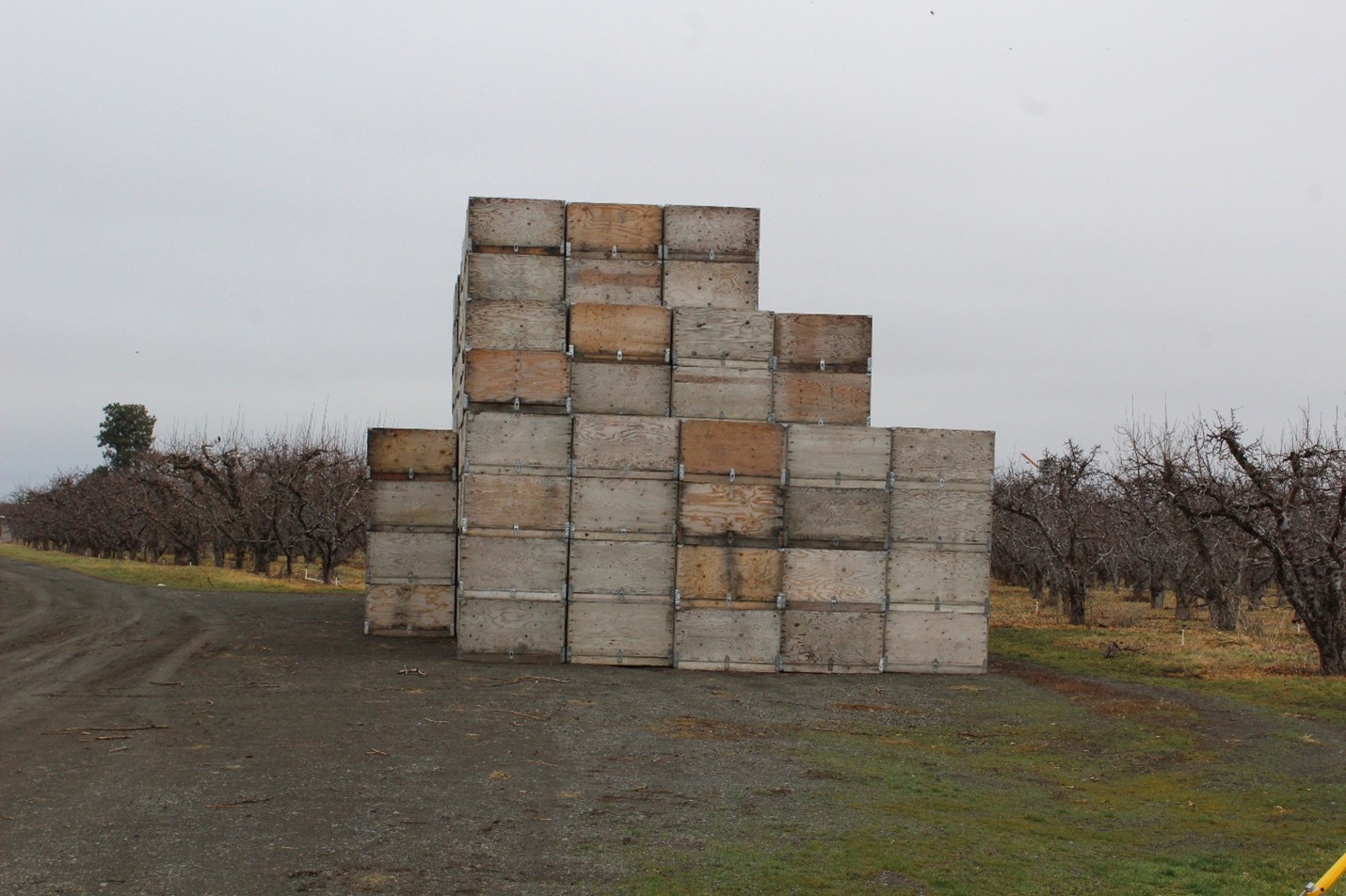
Figure 1. Wooden bin pile next to an active apple orchard, December 2025.
Harvest bins and codling moth pressure
After emerging from the fruit, codling moth (Cydia pomonella L.) larvae enter bins placed near trees during the growing season and spin up protective silk cocoons (hibernaculum) within cracks and crevices of wooden and, to a lesser extent, plastic bins (Higbee et al., 2001). This is especially important when considering pre-harvest bin placement, as most infestations occur during the period when bins are stored in orchards, rather than at harvest through infested fruit (Higbee et al., 2001). As a result, it is recommended to wait as close as possible to harvest to bring bins into the orchard. While some cold storage regimes have shown the ability to kill codling moth larvae of earlier stages, overwintering codling moth larvae are very freeze-tolerant and have very low respiration rates, which enables them to survive the low temperature, oxygen, and carbon dioxide levels for months in cold storage/controlled atmosphere and emerge as adults later in the spring within commercial orchards (Hansen et al., 2007; Moffit and Albano, 1972). Codling moth emerging from bin piles also develop at different rates than those in the orchard, whether due to the time the bin was brought into the orchard or uneven temperature distribution within the bin pile, which can complicate monitoring efforts and timing of management decisions. Additionally, because bins are randomly distributed back to growers, they can inoculate clean orchards with codling moths from elsewhere in the state. This bin movement is particularly important for insecticide resistance management, as it has the potential for moving resistant moths over large scales.
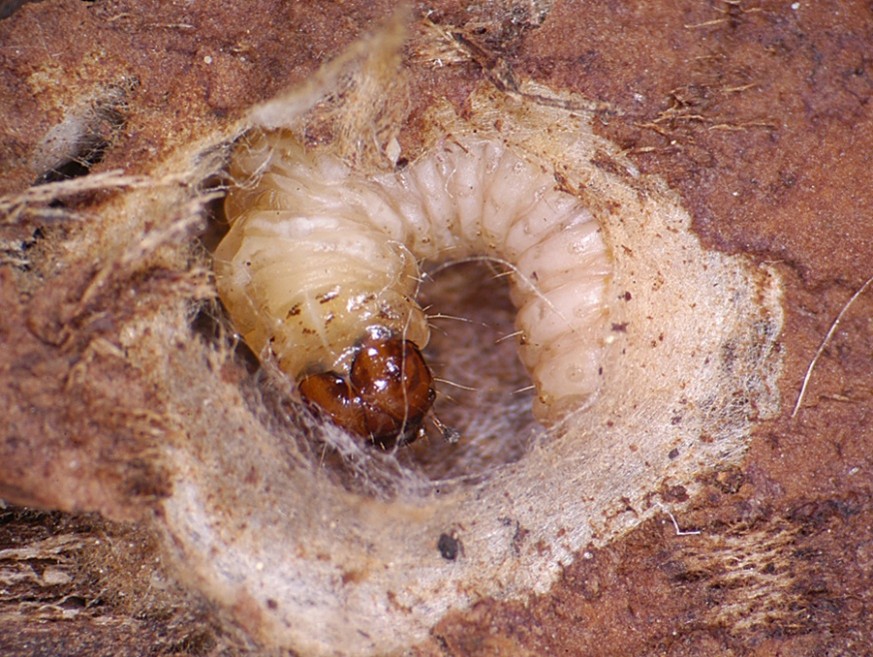
Figure 2. Overwintering codling moth larvae inside hibernaculum (E. Beers, WSU)
Fungal issues in harvest bins
Along with harboring codling moth, fruit bins can serve as sources of fungal inoculum for new fruits being placed into bins (Jurick et al., 2023; Sanderson and Spotts, 1994). Fungal spores infect apples through wounds, cracks, severe bruises, lenticels, and stems (Errampalli, 2004; Rosenberger et al., 2006), reproducing asexually and dispersing via air, water, or direct contact. Fungal spores can adhere to walls of wooden and plastic bins and re-inoculate fruits that contact them. Spores carry the sensitivity phenotype to fungicides over time, meaning fungicide-resistant spores can carry over to the following season and spread, leading to greater incidence of fungicide resistance (Amiri, WSU Tree Fruit).
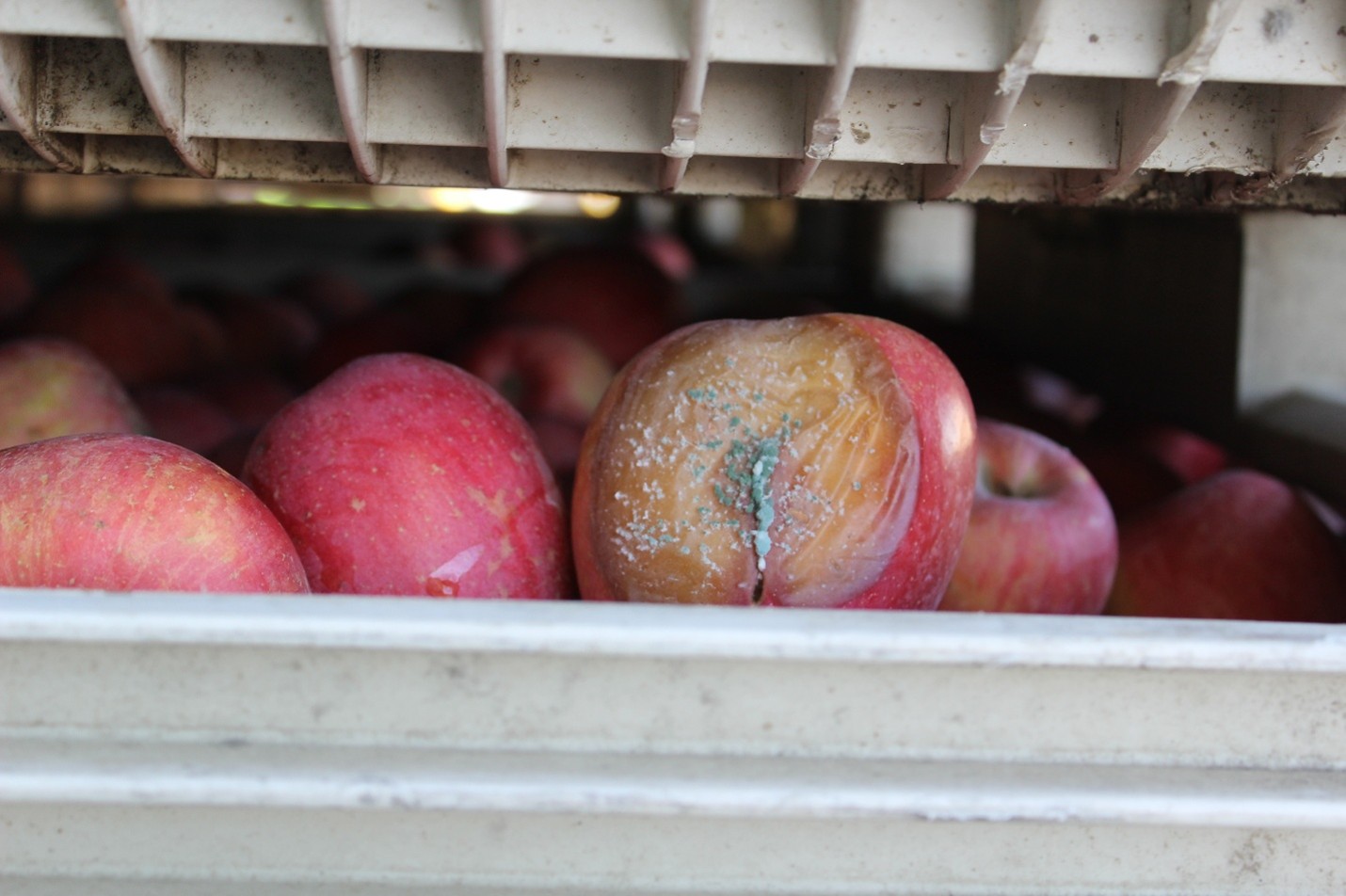
Figure 3. ‘Fuji’ apple with blue mold sitting in a harvest bin.
Collaborative efforts to reduce bin handling problems
Postharvest bin handling plays a crucial role in disrupting the life cycle of both insects and pathogens in tree fruit. A dedicated focus group will provide case studies on bin handling practices, economic analyses, and provide feasible commercial alternatives to be implemented in production areas. The group contains representatives across entomology, pathology, and food safety. They are taking active steps to consider the operational, financial, and logistical constraints of stakeholders. When adapting bin handling procedures, there are two key points: how much is it going to cost, and will it slow down my throughput? Finding an economical and scalable option is imperative to successful adoption. As with any change, adoption and adjustment will vary from one operation to another based on cost and logistics. Through evaluation of several options, well-informed decisions will be made for each individual operation.
Best management practices for postharvest bin handling
- Bins should be staged in the orchard as close to harvest as possible
- Reduces risk of codling moth entering bins and irrigation water contacting bin
- Visible debris should not be present prior to filling bins
- Reduces disease pressure, especially during long-term storage
- Bin piles should be stacked carefully to reduce risk of them collapsing
- The top bins of every stack should be flipped upside down to reduce contamination
Contact

Thiago Campbell
Washington State University
Thiago.campbell@wsu.edu
(786) 375-1363

Danielle Gray
Washington State University
Danielle.gray@wsu.edu
(509) 542-7842
Additional information
Amiri, A. The importance of room and bin sanitation to reduce postharvest decay. Fruit Matters, WSU Tree Fruit.
Errampalli, D. 2004. Effect of fludioxonil on germination and growth of Penicillium expansum and decay in apple cvs. Empire and Gala. Crop Protection 23(9):811-817. https://doi.org/10.1016/j.cropro.2003.12.010
Hansen, J., M. L. Heidt, and P. A. Anderson. 2006. Bin sterilization to prevent reintroduction of codling moth. J. Agric. Urban Entomol. 23(1):17-26. https://www.scentsoc.org/uploads/1/2/1/6/121603637/jaue_2006_vol23.pdf
Hansen, J. D., M. A. Watkins, M. L. Heidt, & P. A. Anderson. 2007. Cold storage to control codling moth larvae in fresh apples. HortTechnology 17(2):195–198. https://doi.org/10.21273/HORTTECH.17.2.195
Higbee, B. S., Calkins, C. O., & Temple, C. A. (2001). Overwintering of codling moth (Lepidoptera: Tortricidae) larvae in apple harvest bins and subsequent moth emergence. Journal of Economic Entomology 94(6):1511–1517. https://doi.org/10.1603/0022-0493-94.6.1511
Jurick, W. M., M. W. Choi, V. L. Gaskins, K. A. Peter, and K. D. Cox. 2023. Would you like wood or plastic? Bin material, sanitation treatments, and bin inoculum levels impact blue mold decay of stored apple fruit. Plant Disease 107:1177-1182. https://doi.org/10.1094/PDIS-05-22-1045-RE
Moffitt, H. R. & D. J. Albano. 1972. Effects of commercial fruit storage on stages of the codling moth. Journal of Economic Entomology, 65(3), 770–773. https://doi.org/10.1093/jee/65.3.770
Rosenberger, D. A., C. A. Engle, F. W. Meyer, and C. B. Watkins. 2006. Penicillium expansum invades apples through stems during controlled atmosphere storage. Plant Health Progress 7(1). https://doi.org/10.1094/PHP-2006-1213-01-RS
Sanderson, P.G. & R.A. Spotts. 1994. Postharvest decay of winter pear and apple fruit caused by species of Penicillium. Postharvest pathology and Mycotozins 85(1): 103-110.
Fruit Matters articles may only be republished with prior author permission © Washington State University. Reprint articles with permission must include: Originally published by Washington State Tree Fruit Extension Fruit Matters at treefruit.wsu.edu and a link to the original article.