Written by Riley Harding, Wayne M. Jurick II, and Kerik Cox, Cornell University, July 6, 2026
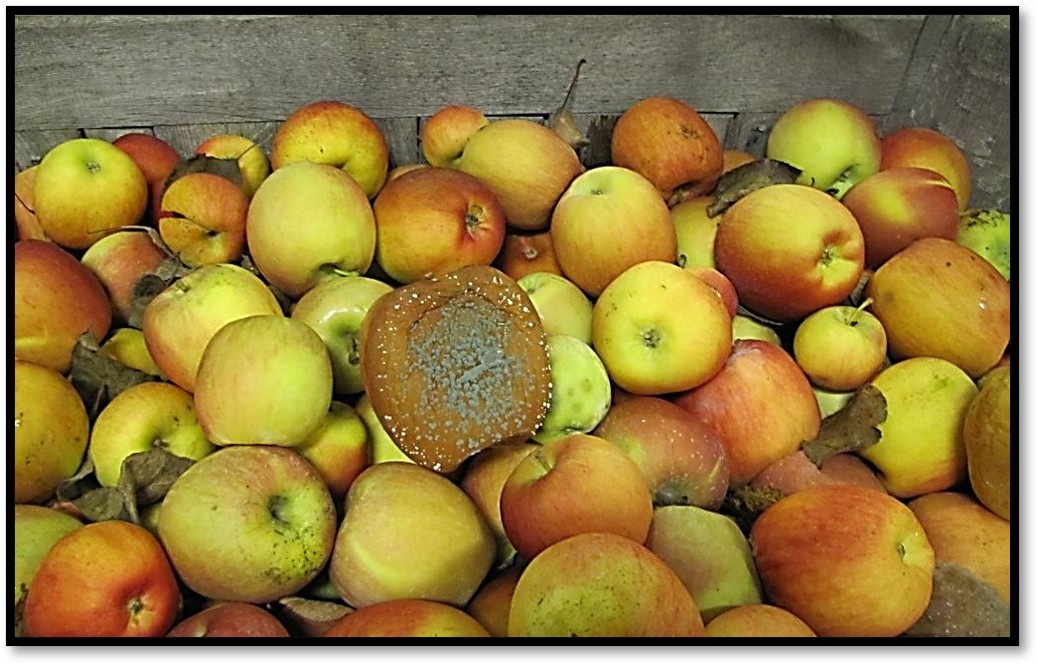
Growing apples has become a challenging task that trickles all the way down to the smallest details like the type of bin material used to store apples. Growers have the option of wood or plastic bins to store harvested fruit destined for the packinghouses. If we were to zoom in on the surfaces of these bins, we would find that wooden bins have plenty of crevasses and cracks that can house fungal spores (Figure 1, 2). Spores are the microscopic reproductive parts of fungi that allow for its growth and dispersal and there are a lot of different fungal spores that can lead to postharvest fruit decay (Figure 3). Most notable are the spores that cause blue mold (Penicillium expansum) which can be circulated easily and survive for long periods of time in a resting state.
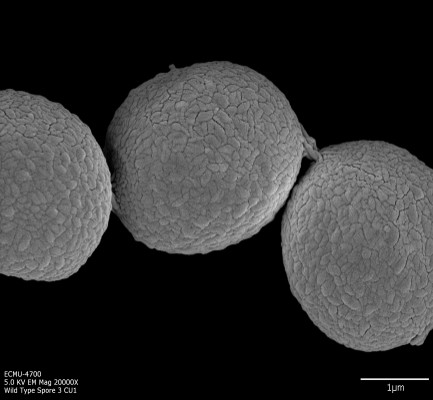
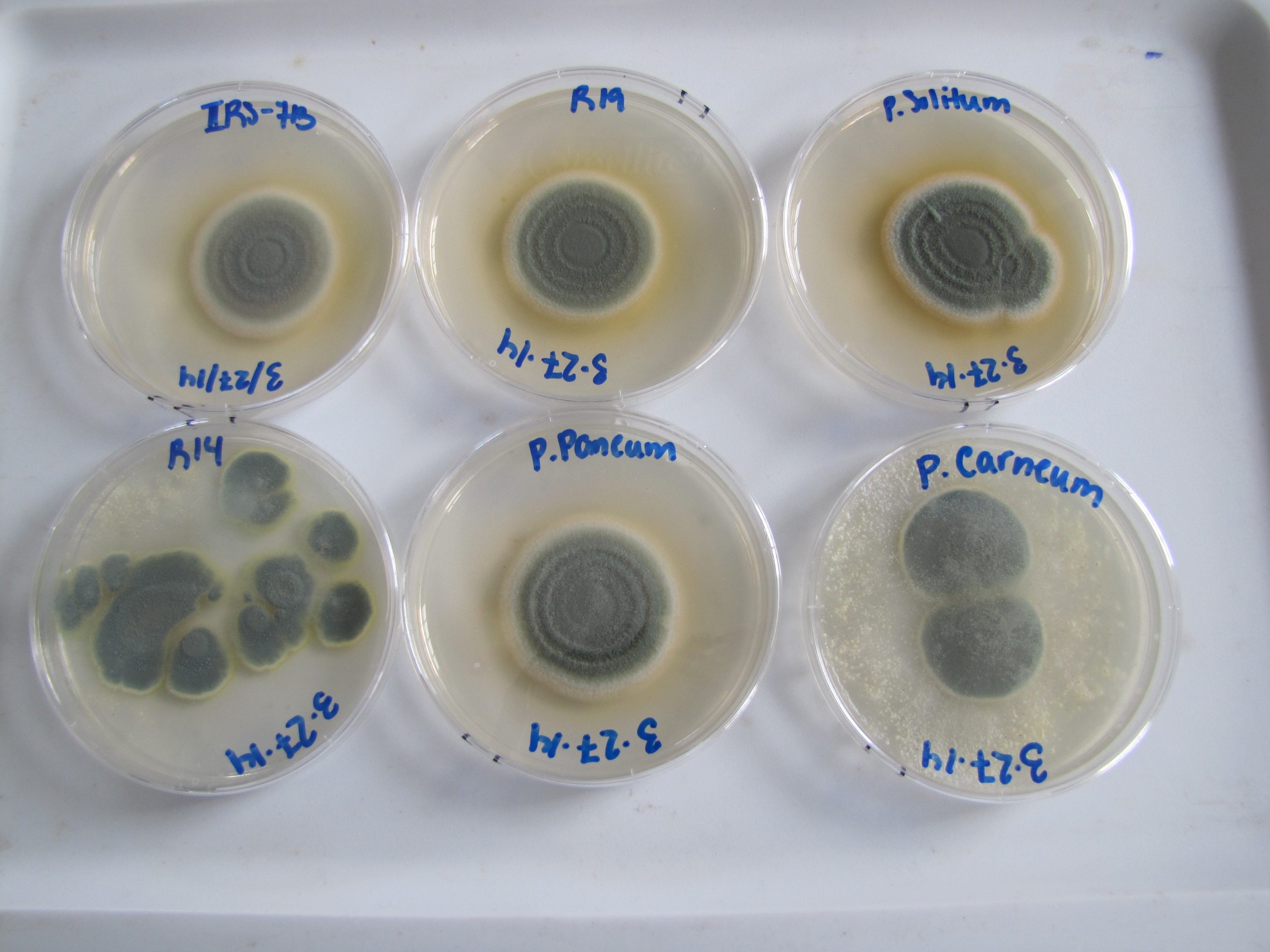
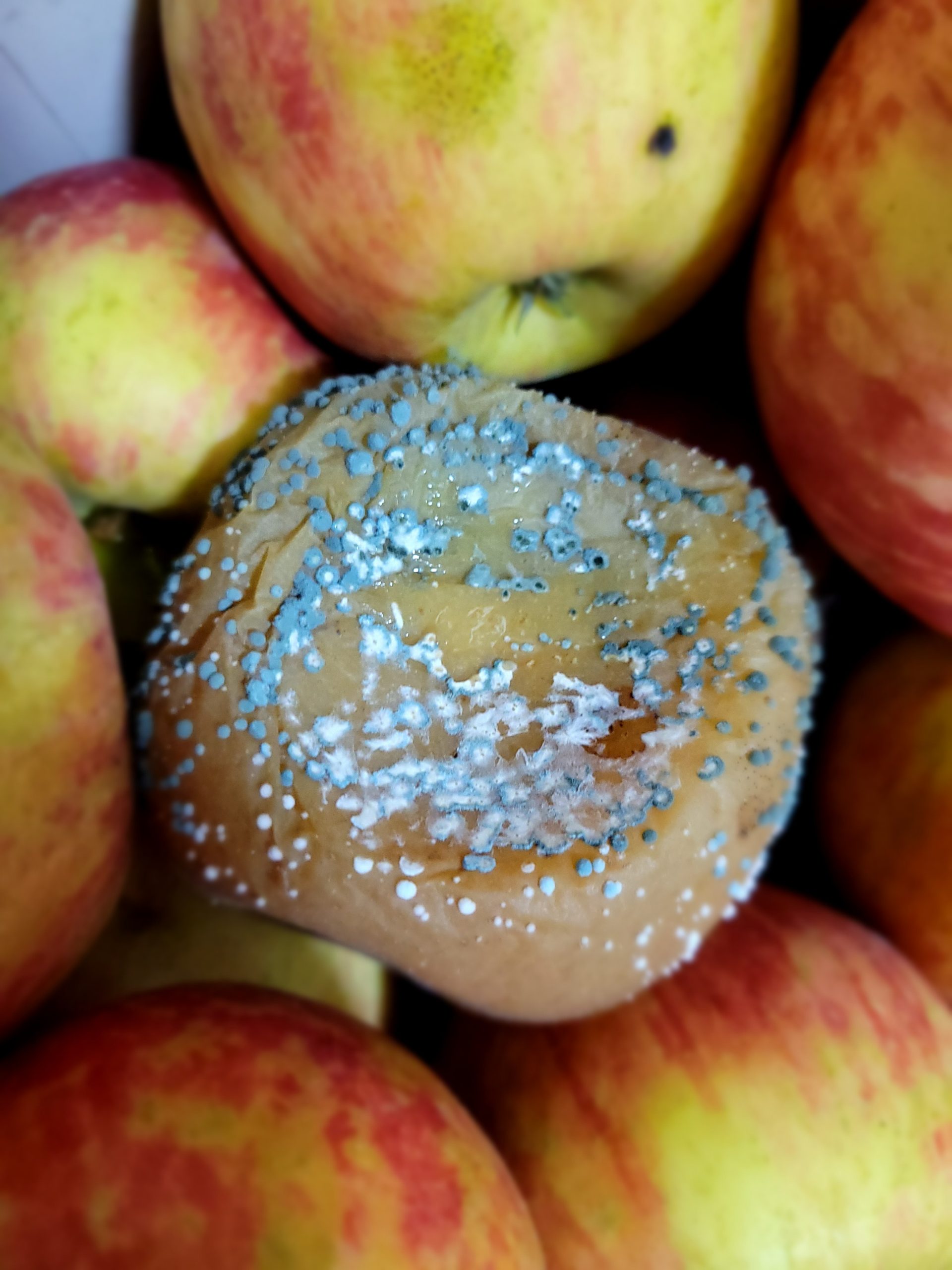
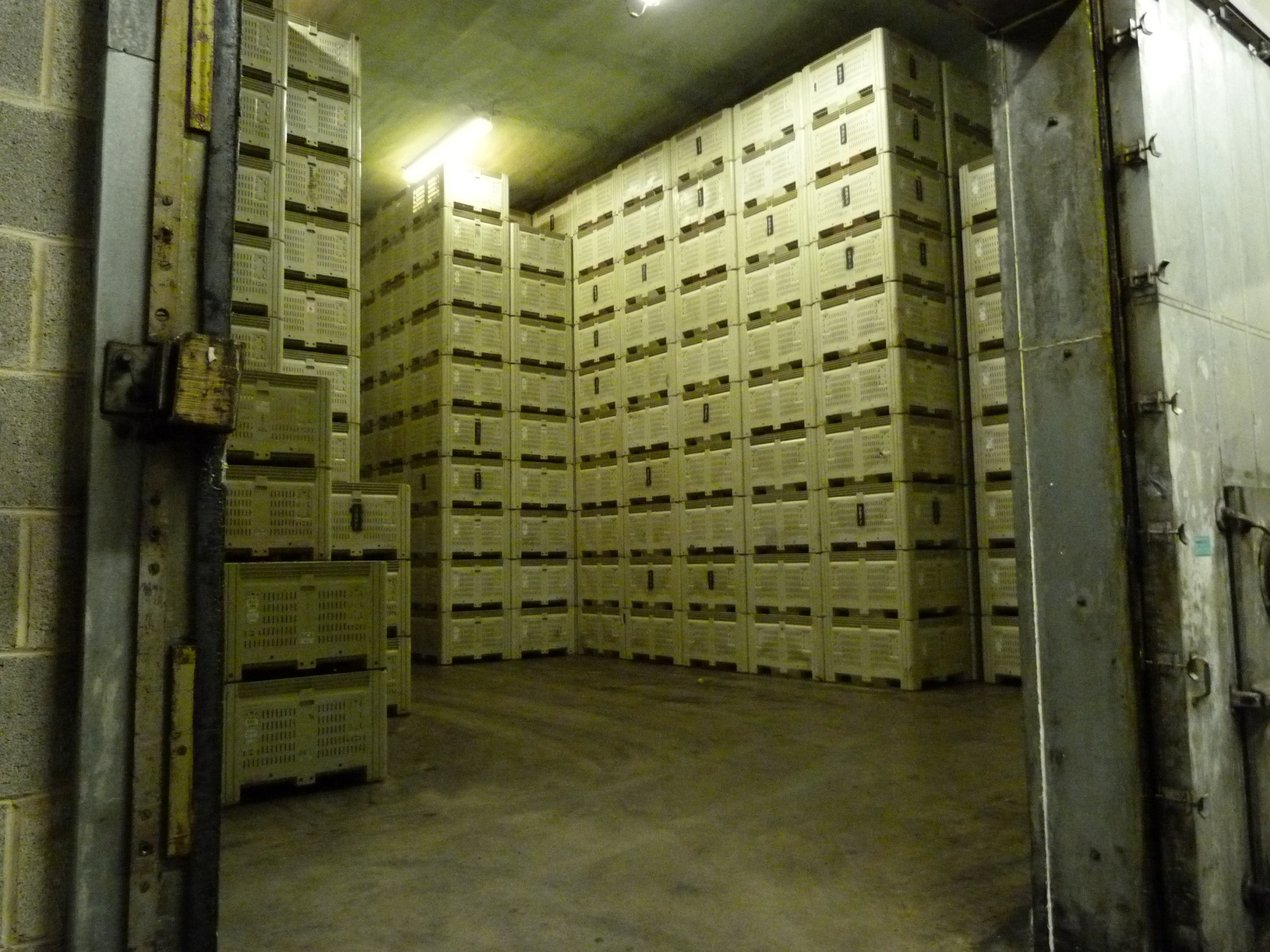
Plant pathologists on the east coast have found that plastic bins (Figure 4A) hold far fewer spores than traditional wooden bins (Figure 4B) (Jurick et al., 2023). Wooden bins have been shown to retain spores even after sanitation; enough to cause disease in apples stored for even short periods of time. Such infested bins can serve as inoculum for postharvest diseases when apples are dumped into the packing line flumes. Just by switching to plastic, losses due to blue mold could be reduced. The return on investment (ROI) in plastic is even greater considering longevity of plastic bins compared to the less sturdy wooden bins.
The same researchers (Jurick and Cox) have also investigated novel bin sanitation options such as thyme oil, 2-phenylethanol and UV-C germicidal light (Jurick et al., 2023; Luciano-Rosario et al., 2025). At large scale (20-bu bins) they found that thyme oil is an effective bin sanitizer. Due to the 25B label, it is exempt from EPA and can be used on a range of surfaces. Thyme oil performed similarly to the industry standards, steam sterilization and hot water dips. Moreover, the use of steam and hot water requires additional infrastructure and the high energy costs needed to keep the water at an effective temperature for sanitation.
An alternative on the horizon shows the potential of 2-phenylethanol (2-PE) as a promising compound (not yet made into a product) as well as UV-C germicidal light, which also has potential as a general sanitizer. Two-percent bleach was also an effective treatment in this pilot study on apple bin materials. Next steps for these products will be scale-up studies in packinghouses that will determine the potential integration of these tactics as well as ROI, impact on prevalence of postharvest pathogens and their ability to reduce levels of multi-fungicide resistant fungal spores.
In summary, a two-pronged approach works best: transitioning to plastic where fungal spores can’t thrive and the use of bin sanitation products like thyme oil that helps prevent bins as an inoculation point during processing. Stay tuned for more updates on 2-PE and UV-C.
Contact

Thiago Campbell
Washington State University
Thiago.campbell@wsu.edu
(786)-375-1363

Riley Harding
Cornell University
rsh263@cornell.edu
(315)-879-1381
Funding and acknowledgements
Jurick’s work has been supported by USDA-ARS National Program 303 plant diseases. Competitive funds have also made this work possible from a variety of sources that include USDA NIFA CPPM and State Horticulture Association of Pennsylvania.
Additional information
Jurick, W.M., Choi, M.-W., Gaskins, V.L., Peter, K.A., Cox, K.D., 2023. Would You Like Wood or Plastic? Bin Material, Sanitation Treatments, and Bin Inoculum Levels Impact Blue Mold Decay of Stored Apple Fruit. Plant Dis. 107, 1177–1182. https://doi.org/10.1094/PDIS-05-22-1045-RE
Luciano-Rosario, D., Castro, J., Peter, K.A., Cox, K.D., Fonseca, J.M., Gaskins, V.L., Jurick, W.M., 2025. Mold in, mold out: Harvest bins harbor viable inoculum that can be reduced using novel sanitation methods to manage blue mold decay of apples. Postharvest Biol. Technol. 221, 113323. https://doi.org/10.1016/j.postharvbio.2024.113323
Fruit Matters articles may only be republished with prior author permission © Washington State University. Reprint articles with permission must include: “Originally published by Washington State Tree Fruit Extension Fruit Matters at treefruit.wsu.edu” and a link to the original article.