Written by Annie Wall and Per McCord, Washington State University Irrigated Agriculture Research and Extension Center, December 3, 2025
The Washington State University cherry breeding program, led by Dr. Per McCord in Prosser, WA, is releasing a new variety of sweet cherry. Currently known as R19, the new early variety will be the first sweet cherry released by WSU since 2007. The program hopes this new variety will provide a better start to the Pacific Northwest cherry season and is continuing to develop other sweet cherries that will benefit the PNW industry.
R19 has excellent qualities desirable to both the grower and consumer. It has an early harvest timing that matches ‘Chelan’ but consistently outperforms its early ripening competitors with higher BRIX, larger row size, and better firmness. Its taste and texture are exceptional. Due to the sweetness of R19, it may need to be protected from bird predation. R19 does best in sites without too much winter cold and moisture, and the breeding program has applied for a grant that will allow Dr. McCord’s team to evaluate rootstocks and training systems to better advise growers on R19’s growth and fruiting habits.
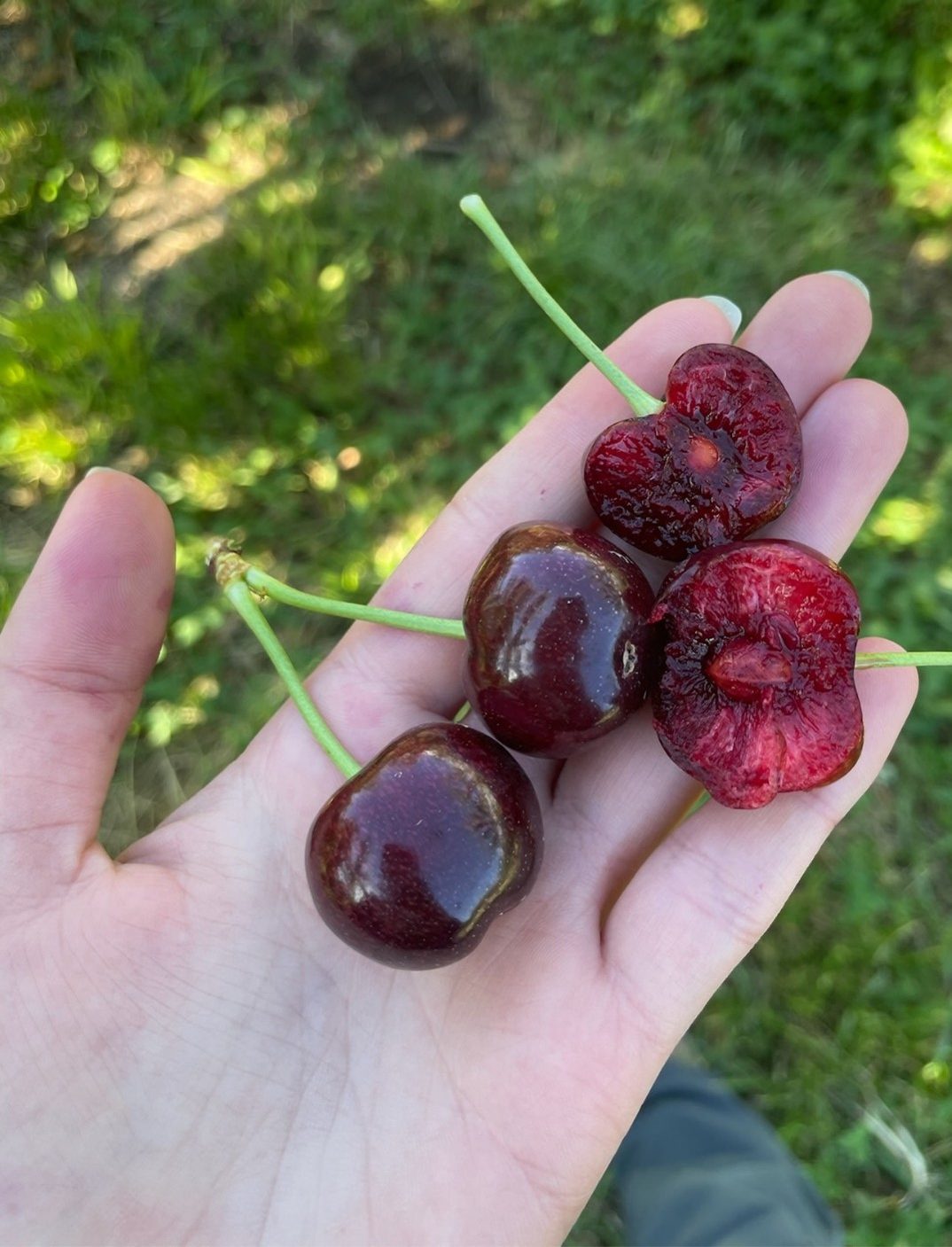
R19 should be available in limited quantities for pre-order in spring of 2026, and there are several more excellent varieties being developed at WSU’s cherry breeding program to look forward to in future years. Dr. McCord crosses cherries to target early or late season ripening times, resistance to mildew, self-fertility, and fruit size, firmness, and crack resistance. The program uses a 3-phase approach to evaluate the resulting new seedlings.
In phase 1, the program uses genetic testing to streamline the seedling selection process. Seedlings that have the molecular markers associated with the program’s targeted qualities are planted and the rest eliminated. After the trees produce fruit, the best cherries are selected and vigorously evaluated for fruit qualities like size, flavor, firmness, defects, and cracking. If a variety consistently outperforms a commercial standard for 2-3 years, it may be advanced to the next stage.
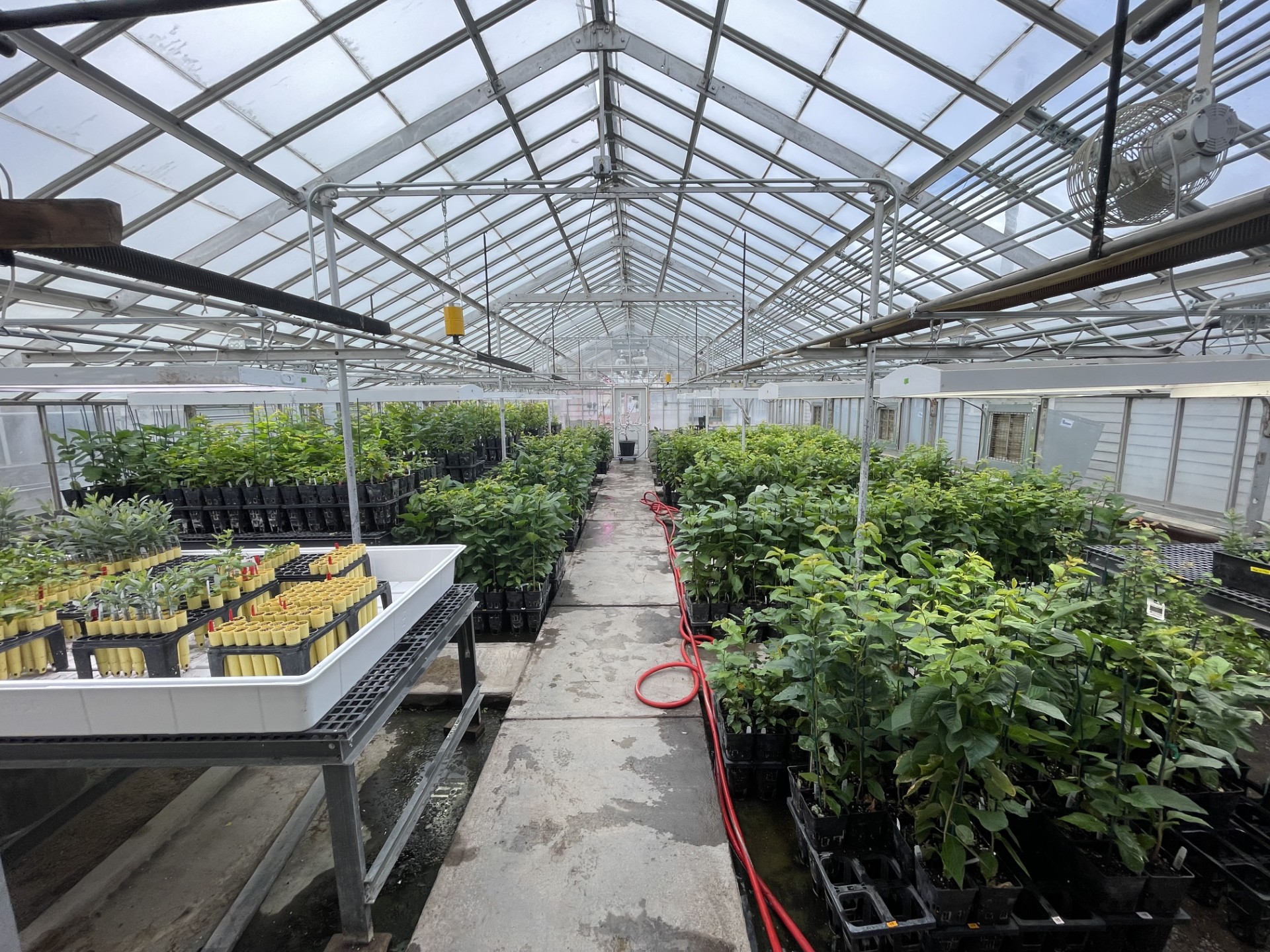
As the variety moves to the second phase, it is grafted to a rootstock and planted in replicates across multiple locations. It will continue to be evaluated for the same fruit qualities as in the first phase plus the addition of more parameters such as sugar and acid content, stem pull force, and fruit quality after storage. If the variety advances to the third and final phase, enough are planted that each field trial can be run over a commercial packing line and samples are taken to the fruit lab for continued evaluation.
The WSU cherry breeding program currently has 3 varieties in phase 3, 13 varieties in phase 2, and thousands of seedlings in phase 1. Those in the final phase include R3, a large and sweet variety that ripens a few days after ‘Chelan’; R29, a very large, self-fertile mid-season cherry with good tree vigor; and R35B, a very large, self-fertile blush cherry that ripens about 9 days after ‘Rainier’. The newly released R19 variety won’t be the last to come out of WSU’s cherry breeding program.
Contact

Per McCord
Washington State University
phmccord@wsu.edu
509-786-9254
Funding and acknowledgements
This research was funded by the Washington Tree Fruit Research Commission, the Oregon Sweet Cherry Commission, and the USDA National Institute of Food and Agriculture, Hatch Project 7003737, “Crop Improvement and Sustainable Systems”.
Fruit Matters articles may only be republished with prior author permission © Washington State University. Reprint articles with permission must include: Originally published by Washington State Tree Fruit Extension Fruit Matters at treefruit.wsu.edu and a link to the original article.